Process — Fresh orange juice and orange juice from concentrate
📄 Bài mẫu band 8–9
| Introduction | Paraphrase: sơ đồ hai quy trình sản xuất nước cam — nước ép tươi và nước cam pha lại từ dịch cô đặc. |
| Overview | Overall: hai quy trình xuất phát từ cùng nguyên liệu và giống nhau ở các khâu đầu, chỉ tách nhau ở việc có cô đặc rồi hoàn nguyên hay không — điều này quyết định cách bảo quản sản phẩm cuối. |
| Body 1 | Bước chung: thu hoạch → rửa và loại quả hỏng → ép lấy nước, tách vỏ và bã. |
| Body 2 | Nhánh tươi: thanh trùng → làm lạnh → đóng hộp giữ lạnh. Nhánh cô đặc: bốc hơi nước → đông lạnh vận chuyển → thêm nước hoàn nguyên → thanh trùng lại → đóng hộp để lâu. |
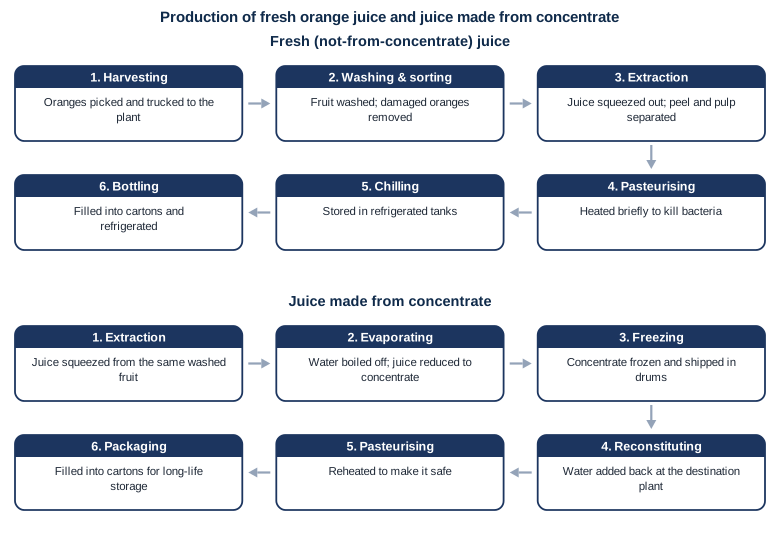
The diagram compares the stages involved in producing fresh orange juice with those used to make juice from concentrate.
Overall, both products begin with the same raw material and share their opening stages, but the two lines diverge once the juice has been squeezed. The essential difference is whether the water content is removed and later replaced, and this determines how the finished juice must be stored.
In both processes, oranges are first harvested and transported to a processing plant, where they are washed and any damaged fruit is removed by hand. The juice is then extracted mechanically and the peel and pulp are separated out. Up to this point the two products are indistinguishable.
The fresh juice is simply pasteurised, chilled in refrigerated tanks and filled into cartons, which must then be kept cold. In the alternative process, the juice is heated so that most of its water is boiled off, leaving a thick concentrate that is frozen and shipped in drums. At the destination plant, water is added back so that the juice is reconstituted, after which it is pasteurised a second time and packaged. The result is a shelf-stable product, in contrast to the fresh juice, which has a short life.
| diverge | rẽ nhánh, tách ra |
| extracted | được ép/chiết ra |
| is boiled off | bị đun bay hơi |
| is reconstituted | được hoàn nguyên |
| shelf-stable | bảo quản được lâu ở nhiệt độ thường |
| in contrast to | trái ngược với |