Process — Two methods of manufacturing black tea
📄 Bài mẫu band 8–9
| Introduction | Paraphrase: sơ đồ mô tả hai quy trình sản xuất trà đen. |
| Overview | Overall: cả hai quy trình đều gồm sáu công đoạn và giống nhau ở phần lớn các bước; khác biệt then chốt nằm ở cách làm dập lá và ở tốc độ oxy hoá, tạo ra hai loại sản phẩm khác nhau. |
| Body 1 | Các bước chung: hái lá → làm héo → (khác) → oxy hoá → sấy nóng. Trình tự và mục đích giống hệt nhau. |
| Body 2 | Khác biệt: Orthodox vò nguyên lá, oxy hoá 2-3 giờ, phân loại theo kích cỡ lá; CTC cắt-xé-vò bằng trục răng, oxy hoá khoảng 1 giờ, sàng thẳng vào túi lọc. |
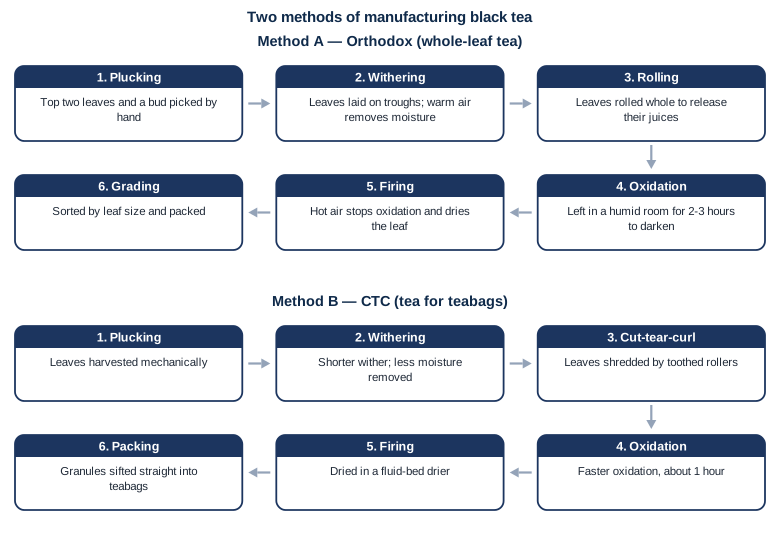
The diagram illustrates two alternative methods by which black tea is manufactured, an orthodox process producing whole-leaf tea and a CTC process producing tea for teabags.
Overall, both methods consist of six stages and share the same basic sequence, from harvesting through to packing. The crucial difference lies in how the leaves are broken up and how quickly they are processed, which is what determines the final product.
The two processes are identical up to a point. In each case fresh leaves are first harvested and then withered, a stage in which warm air draws moisture out of them. Later, both batches are oxidised in a humid environment until the leaf darkens, after which hot air halts oxidation and dries the tea ready for packing.
The crucial difference occurs at the third stage. In the orthodox method the leaves are rolled while still whole, so that they release their juices without breaking apart, and they are then oxidised slowly over two to three hours before being graded by leaf size. In the CTC process, by contrast, the leaves are shredded by toothed rollers, and oxidation is cut short to roughly an hour, producing small granules that are sifted directly into teabags rather than sorted by size.
| identical up to | giống hệt nhau cho tới |
| draws moisture out of | rút ẩm ra khỏi |
| halts oxidation | chặn quá trình oxy hoá |
| The crucial difference | điểm khác biệt then chốt |
| are shredded | bị cắt vụn |
| cut short | bị rút ngắn |