Process — How wine is produced from grapes
📄 Bài mẫu band 8–9
| Introduction | Paraphrase: sơ đồ quy trình sản xuất rượu vang từ nho. |
| Overview | Overall: 8 bước; vài ngày đầu là cơ học (hái, ép, tách bã) nhưng phần lớn thời gian nằm ở hai khâu chờ — lên men 2–3 tuần và ủ thùng sồi tới 2 năm. |
| Body 1 | Cơ học: nho hái tay mùa thu → cán vỡ giữa hai lô, thu nước và vỏ → lên men: men biến đường thành cồn trong 2–3 tuần → ép tách nước khỏi vỏ và hạt. |
| Body 2 | Trưởng thành: ủ trong thùng gỗ sồi tới 2 năm → lọc trong → đóng chai, đóng nút → trữ hầm mát rồi phân phối. |
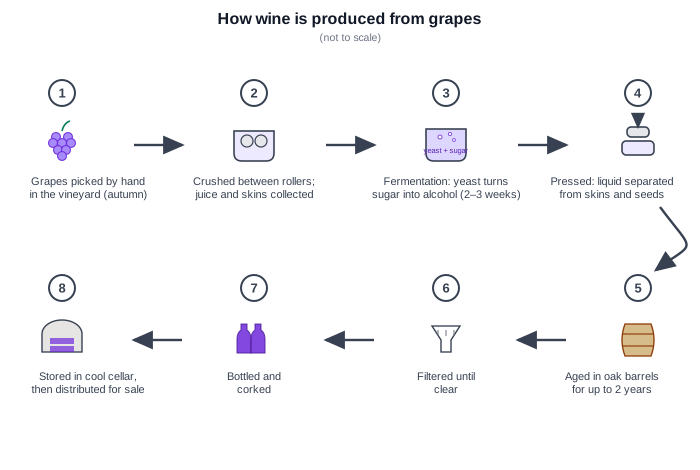
The diagram shows the eight stages by which grapes are turned into wine.
Overall, although the early stages are quick and mechanical, most of the production time is taken up by two long waiting periods — fermentation, lasting two to three weeks, and barrel-ageing, which can continue for up to two years.
The process begins in the vineyard, where the grapes are picked by hand in autumn. They are then crushed between rollers, and the juice, together with the skins, is collected. The third stage is fermentation: yeast is added, and over two to three weeks it converts the natural sugar into alcohol. The fermented liquid is then pressed, separating the young wine from the skins and seeds.
The wine now enters its slow phase. It is aged in oak barrels for anything up to two years, developing its flavour, and afterwards it is filtered until completely clear. The clear wine is bottled and corked, and in the final stage the bottles are stored in a cool cellar before being distributed for sale. From harvest to shop, therefore, a single bottle may take well over two years to complete the process.
| two long waiting periods | hai quãng chờ dài |
| barrel-ageing | ủ thùng gỗ |
| picked by hand | hái thủ công |
| fermentation | sự lên men |
| sugar into alcohol | đường thành cồn |
| separating the young wine | tách rượu non |
| oak barrels | thùng gỗ sồi |
| bottled and corked | đóng chai đóng nút |
| cool cellar | hầm mát |