Process — How drinking water is produced
📄 Bài mẫu band 8–9
| Introduction | Paraphrase: sơ đồ quy trình xử lý và phân phối nước sinh hoạt tới hộ dân. |
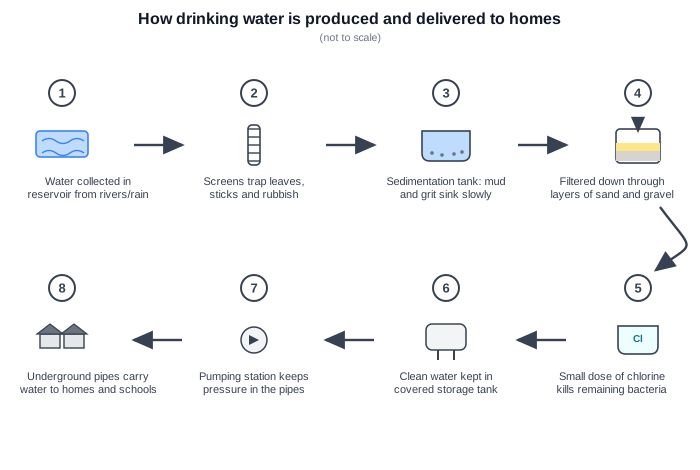
| Overview | Overall: 8 bước; nước hồ được lọc theo thứ tự từ thô đến tinh — chắn rác, lắng bùn, lọc cát, khử trùng clo — rồi trữ trong bể kín và bơm theo đường ống ngầm tới nhà dân. |
| Body 1 | Làm sạch: nước sông/mưa gom về hồ chứa → lưới chắn giữ lá, cành, rác → bể lắng cho bùn cát chìm từ từ → lọc xuyên qua các lớp cát, sỏi giữ hạt mịn. |
| Body 2 | Khử trùng & phân phối: châm lượng nhỏ clo diệt vi khuẩn còn lại → trữ trong bể kín có mái che → trạm bơm duy trì áp lực → ống ngầm dẫn tới nhà dân, trường học. |
The diagram shows the eight stages by which raw water is turned into safe drinking water and delivered to homes.
Overall, the water passes through a sequence of increasingly fine cleaning steps — from screens that trap rubbish, to settling tanks, sand filters and finally chemical disinfection — before being stored and pumped through underground pipes to consumers.
The process begins with water collected in a reservoir, which is fed by rivers and rainfall. From there it passes through screens, which trap large debris such as leaves, sticks and rubbish. The water then flows into a sedimentation tank, where it is held still long enough for mud and grit to sink slowly to the bottom. Next, it is filtered downwards through layers of sand and gravel, which capture the fine particles that remain.
At the fifth stage a small dose of chlorine is added to kill any remaining bacteria, making the water safe to drink. The clean water is then kept in a covered storage tank until it is needed. A pumping station maintains pressure in the network, and finally the water travels through underground pipes to homes, schools and other buildings.
| raw water | nước thô |
| screens | lưới chắn rác |
| debris | rác/mảnh vụn |
| sedimentation tank | bể lắng |
| grit | sạn cát |
| layers of sand and gravel | các lớp cát và sỏi |
| a small dose of chlorine | một liều clo |
| maintains pressure | duy trì áp lực nước |