Process — Electricity from a tidal barrage
📄 Bài mẫu band 8–9
| Introduction | Paraphrase: sơ đồ cách đập chắn thuỷ triều tạo ra điện từ mực nước lên xuống. |
| Overview | Overall: 5 bước lặp lại; điểm đáng nói nhất là cùng một tổ máy phát điện HAI lần mỗi ngày — khi triều dâng chảy vào và khi triều rút chảy ra. |
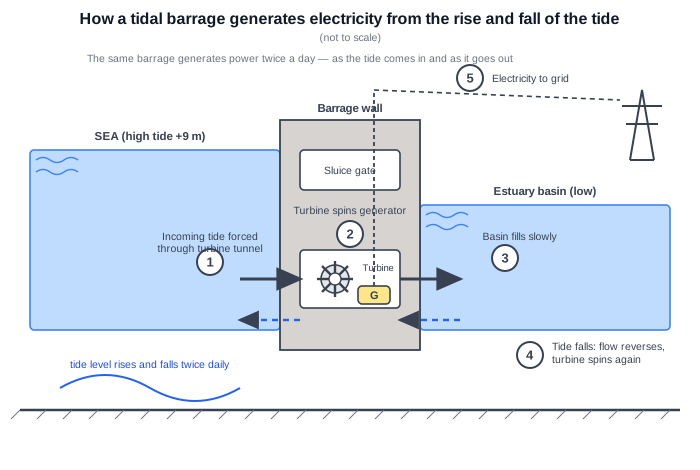
| Body 1 | Triều lên: nước biển bị ép qua đường hầm turbine xuyên thân đập → turbine quay máy phát → điện lên lưới → vịnh phía trong đầy dần. |
| Body 2 | Triều xuống: mực biển hạ, nước trong vịnh chảy ngược ra qua đúng turbine đó → phát điện lần hai; chu kỳ lặp lại hai lần mỗi ngày. |
The diagram explains how a tidal barrage generates electricity from the twice-daily rise and fall of the tide.
Overall, the system has five main stages which repeat continuously, and its most striking feature is that the same turbines produce power twice a day — first as the incoming tide flows into the estuary basin, and again as the falling tide drains back out to sea.
When the tide rises, the sea level on the seaward side of the barrage wall becomes significantly higher than the water in the basin behind it, in this case by up to nine metres. Seawater is therefore forced through a tunnel in the wall, spinning a turbine which drives a generator, and the electricity produced is carried by cables to the national grid. As this happens, the basin behind the barrage slowly fills.
Once the tide begins to fall, the process reverses. The trapped water in the basin is now higher than the open sea, so it flows back through the same tunnel, turning the turbine a second time. A sluice gate above the tunnel controls the flow, and because tides rise and fall twice daily, this cycle of generation is repeated four times in every twenty-four hours.
| tidal barrage | đập chắn thuỷ triều |
| estuary basin | vịnh cửa sông |
| seaward side | phía hướng ra biển |
| forced through | bị ép chảy qua |
| drives a generator | kéo máy phát điện |
| the process reverses | quy trình đảo chiều |
| sluice gate | cửa xả |
| national grid | lưới điện quốc gia |