Process — How sugar is produced from sugar cane
📄 Bài mẫu band 8–9
| Introduction | Paraphrase: sơ đồ quy trình sản xuất đường từ cây mía. |
| Overview | Overall: 9 bước từ ruộng tới bao đường; mía trồng 12–18 tháng, ép lấy nước, làm sạch bằng đá vôi, cô đặc, ly tâm tách tinh thể rồi sấy, đóng bao. |
| Body 1 | Từ ruộng tới nước mía: mía trồng 12–18 tháng → thu hoạch bằng tay hoặc máy → đưa vào máy ép, nước mía được vắt kiệt. |
| Body 2 | Từ nước mía tới bao đường: lọc trong bằng đá vôi → đun trong nồi cô thành siro đặc → quay ly tâm, tinh thể tách khỏi mật rỉ → đường thô sấy khô, làm nguội → cân, đóng bao chở đi tiêu thụ. |
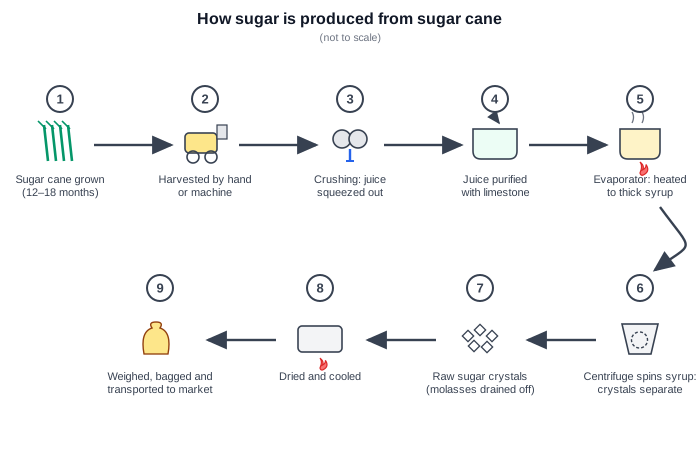
The diagram shows the nine stages in the production of sugar from sugar cane.
Overall, the process combines a long agricultural phase with a much faster industrial one: the cane takes over a year to grow, but once harvested it is crushed, purified, concentrated and crystallised in a continuous factory sequence.
The first stage is cultivation, with the cane taking between twelve and eighteen months to mature. It is then harvested, either by hand or by machine, and delivered to the mill. There, the cane is passed between heavy rollers in a crushing machine, which squeezes out the juice.
The raw juice is then purified using limestone, which removes impurities, before being heated in an evaporator until most of the water has boiled away and a thick syrup remains. This syrup is spun at high speed in a centrifuge, separating the sugar crystals from the liquid molasses, which is drained off. The raw sugar is then dried and cooled. In the final stage, it is weighed, packed into sacks and transported to market. From a single field of cane, therefore, the process ends with dry, ready-to-sell sugar in little more than a day of factory time.
| cultivation | khâu canh tác |
| mature | trưởng thành/đến vụ |
| mill | nhà máy ép |
| squeezes out the juice | vắt kiệt nước mía |
| limestone | đá vôi |
| evaporator | nồi cô đặc |
| centrifuge | máy ly tâm |
| molasses | mật rỉ |