Process — The life cycle of the salmon
📄 Bài mẫu band 8–9
| Introduction | Paraphrase: sơ đồ vòng đời cá hồi qua sáu giai đoạn. |
| Overview | Overall: chu trình khép kín kéo dài nhiều năm, di chuyển nước ngọt → biển → về đúng dòng sông cũ; cá trưởng thành chết sau khi đẻ và vòng đời bắt đầu lại. |
| Body 1 | Nước ngọt: trứng đẻ trong lớp sỏi thượng nguồn vào mùa thu → cá bột nở, ăn ở nước ngọt 5–6 tháng → khoảng 2 tuổi thành smolt bơi xuôi ra biển. |
| Body 2 | Biển & trở về: cá lớn kiếm ăn ngoài biển tới 4 năm → bơi ngược đúng dòng sông cũ, vượt thác → cá cái đẻ trứng; hầu hết cá bố mẹ chết, chu trình lặp lại. |
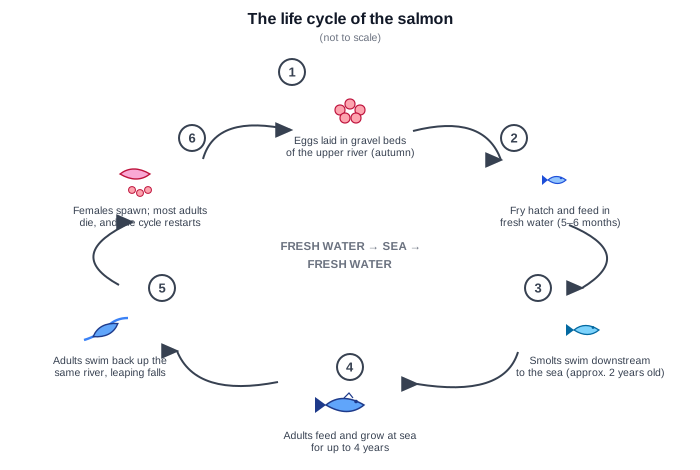
The diagram depicts the six stages in the life cycle of the salmon, from egg to spawning adult.
Overall, the cycle is a closed one that spans several years and two very different habitats: salmon hatch in fresh water, mature in the open sea, and finally return to the river of their birth to breed, after which most of them die and the cycle begins again.
The cycle starts in autumn, when eggs are laid in the gravel beds of the upper river. The eggs hatch into small fry, which remain in fresh water for five to six months, feeding and growing. At roughly two years of age the young fish, now known as smolts, swim downstream and enter the sea.
The adult salmon then spend up to four years feeding and growing in the ocean, where they reach full size. When they are ready to breed, they undertake a remarkable return journey, swimming back up the very river in which they hatched and even leaping waterfalls on the way. In the final stage, the females spawn in the same gravel beds, and although the vast majority of adults die soon afterwards, the newly laid eggs ensure the cycle restarts.
| life cycle | vòng đời |
| hatch | nở |
| gravel beds | bãi sỏi đáy sông |
| fry | cá bột |
| swim downstream | bơi xuôi dòng |
| mature | trưởng thành |
| undertake a remarkable return journey | thực hiện hành trình trở về |
| spawning | đẻ trứng |