Process — How leather is made from raw hides
📄 Bài mẫu band 8–9
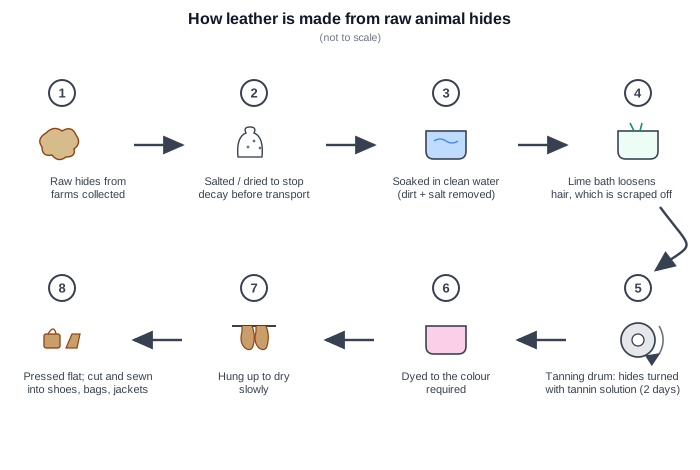
| Introduction | Paraphrase: sơ đồ quá trình biến da thô thành đồ da thành phẩm. |
| Overview | Overall: 8 bước, chia 2 pha — làm sạch và xử lý hoá học (muối, ngâm, khử lông, thuộc) rồi hoàn thiện (nhuộm, phơi, ép, may thành sản phẩm). |
| Body 1 | Pha 1: da thô thu từ trại → ướp muối/phơi chống phân huỷ → ngâm nước sạch loại đất và muối → tắm vôi làm bong lông, lông được cạo bỏ → quay trong trống thuộc với dung dịch tannin ~2 ngày. |
| Body 2 | Pha 2: nhuộm màu theo yêu cầu → treo phơi khô từ từ → ép phẳng → cắt may thành giày, túi, áo khoác. |
The diagram outlines the eight-stage process by which raw animal hides are turned into finished leather goods.
Overall, the process falls into two phases: the hides are first preserved, cleaned and chemically treated, and are then coloured, dried and made up into products such as shoes and bags.
The process begins on farms, where raw hides are collected. Because untreated hide decays quickly, it is immediately salted or dried for transport. On arrival at the tannery, the hides are soaked in clean water to remove both the dirt and the preserving salt. Next, they are placed in a lime bath, which loosens the animal hair so that it can be scraped off. The cleaned hides then go into a large rotating drum, where they are turned in a tannin solution for about two days — the tanning stage that converts perishable hide into durable leather.
In the finishing phase, the leather is dyed whatever colour is required and hung up to dry slowly. Once dry, it is pressed flat to give an even thickness. Finally, the finished material is cut and sewn into leather products, including shoes, bags and jackets, ready for sale.
| raw hides | da thô |
| decays | phân huỷ |
| salted | được ướp muối |
| tannery | xưởng thuộc da |
| lime bath | bể vôi |
| be scraped off | bị cạo bỏ |
| tannin solution | dung dịch tannin |
| durable | bền |