Process — How instant noodles are manufactured
📄 Bài mẫu band 8–9
| Introduction | Paraphrase: sơ đồ quy trình sản xuất mì ăn liền. |
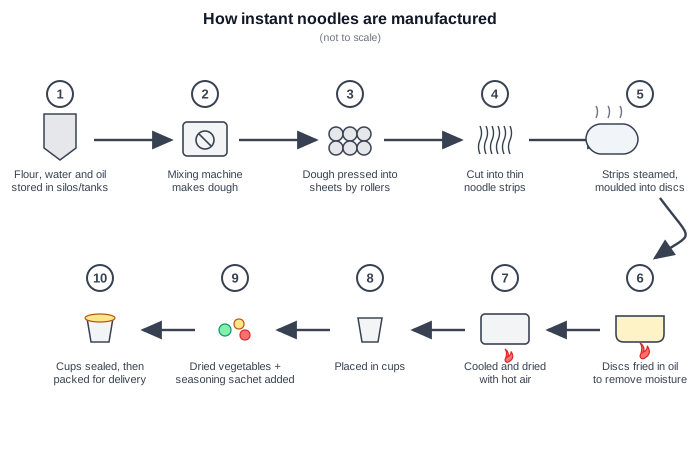
| Overview | Overall: 10 bước từ silo bột tới cốc mì đóng hộp; bột thành sợi, sợi thành vắt tròn, chiên rút ẩm rồi mới vào cốc cùng rau khô và gói gia vị. |
| Body 1 | Nửa đầu: bột mì + nước + dầu trữ trong silo/bồn → máy trộn thành khối bột → cán qua lô thành tấm → cắt sợi mảnh → hấp chín và đổ khuôn thành vắt tròn. |
| Body 2 | Nửa sau: chiên trong dầu để rút ẩm → làm nguội, sấy khí nóng → đặt vào cốc → thêm rau sấy + gói gia vị → dán nắp, đóng thùng giao đi. |
The diagram illustrates the ten-stage industrial process by which instant noodles are manufactured.
Overall, the raw ingredients pass through mixing, shaping and frying stages before the finished noodle discs are placed in cups together with dried vegetables and seasoning, sealed, and dispatched.
The process begins with the storage of flour in silos, alongside tanks of water and oil. These three ingredients are fed into a mixing machine, which combines them into dough. The dough is then pressed into thin sheets by a series of rollers and cut into fine strips. Next, the strips are steamed so that they cook, and are moulded into the familiar round discs.
At the sixth stage the discs are fried in hot oil — a step whose main purpose is to remove moisture so the noodles keep for months — and they are then cooled and dried further with hot air. Each disc is placed in a cup, after which dried vegetables and a sachet of seasoning are added. Finally, the cups are sealed with a foil lid, packed into boxes and delivered to shops, ready to be prepared with nothing more than boiling water.
| silos | bồn chứa/silo |
| dough | khối bột nhào |
| pressed into thin sheets | được cán thành tấm |
| fine strips | sợi mảnh |
| moulded into the familiar round discs | được đổ khuôn thành vắt tròn |
| remove moisture | rút hơi ẩm |
| sachet of seasoning | gói gia vị |
| foil lid | nắp thiếc |