Process — How honey is produced and prepared for sale
📄 Bài mẫu band 8–9
| Introduction | Paraphrase: sơ đồ cách mật ong được sản xuất và chuẩn bị để bán. |
| Overview | Overall: 8 bước chia 2 nơi — thu khung mật tại tổ ong, rồi tách - lọc - lắng - đóng hũ trong xưởng; mật chỉ được thu khi ong đã 'niêm phong' lỗ tổ. |
| Body 1 | Tại trại: ong nuôi trong tổ gần vùng hoa → người nuôi hun khói cho ong dịu rồi nhấc khung → khung đầy mật được đậy nắp sáp → cắt lớp nắp sáp bằng dao nóng. |
| Body 2 | Trong xưởng: quay khung trong máy ly tâm cho mật văng ra → lọc qua rây loại vụn sáp → để lắng 2 ngày cho bọt khí nổi hết → rót hũ, dán nhãn, bán. |
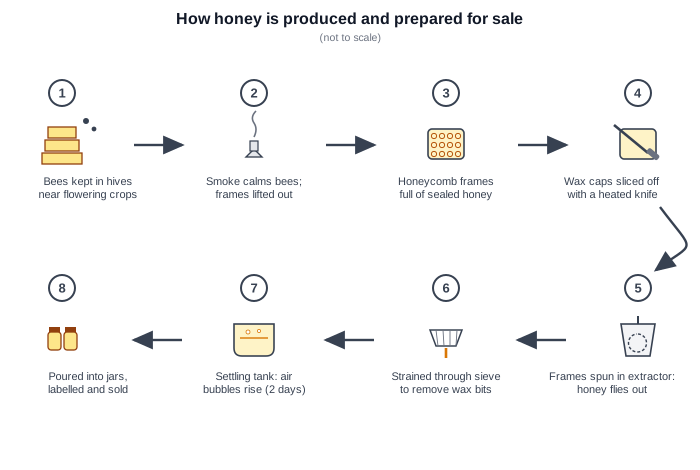
The diagram shows the eight stages by which honey is produced and made ready for sale.
Overall, the process takes place in two locations: honey-filled frames are first collected from beehives, and the honey is then extracted, cleaned and bottled in a processing room. Notably, only frames whose cells the bees have sealed with wax are harvested.
The process begins with bees kept in hives placed close to flowering crops, which supply the nectar. When the honey is ready, the beekeeper blows smoke into the hive; this calms the bees and allows the frames to be lifted out safely. Each frame holds honeycomb whose cells are full of honey and capped with a thin layer of wax, and these wax caps are sliced off with a heated knife.
The uncapped frames are then placed in an extractor, a drum which spins them at speed so that the honey is thrown out of the comb. The liquid honey is strained through a sieve to remove fragments of wax, and left to stand in a settling tank for about two days while air bubbles rise to the surface. Finally, the clear honey is poured into jars, labelled, and sent for sale.
| beehives | tổ ong nuôi |
| flowering crops | cây trồng đang ra hoa |
| calms the bees | làm ong dịu lại |
| honeycomb | tầng sáp mật |
| wax caps | nắp sáp |
| extractor | máy quay ly tâm |
| strained through a sieve | được lọc qua rây |
| settling tank | bể lắng |