Process — The life cycle of the frog
📄 Bài mẫu band 8–9
| Introduction | Paraphrase: sơ đồ vòng đời của ếch. |
| Overview | Overall: 6 giai đoạn khép kín quanh một ao nước; biến đổi lớn nhất là từ sinh vật thở bằng mang sống hoàn toàn dưới nước thành động vật thở bằng phổi sống trên cạn, rồi quay về ao sinh sản. |
| Body 1 | Dưới nước: trứng đẻ thành đám bọc thạch nổi trên mặt ao → nòng nọc nở ra, có đuôi và mang, sống hẳn dưới nước → chân sau mọc trước, mang dần thay bằng phổi. |
| Body 2 | Lên cạn: ếch con đủ 4 chân, đuôi teo dần, bắt đầu thở khí trời → ếch trưởng thành sống trên cạn, chỉ về nước khi sinh sản → ghép đôi trong ao và lứa trứng mới được đẻ. |
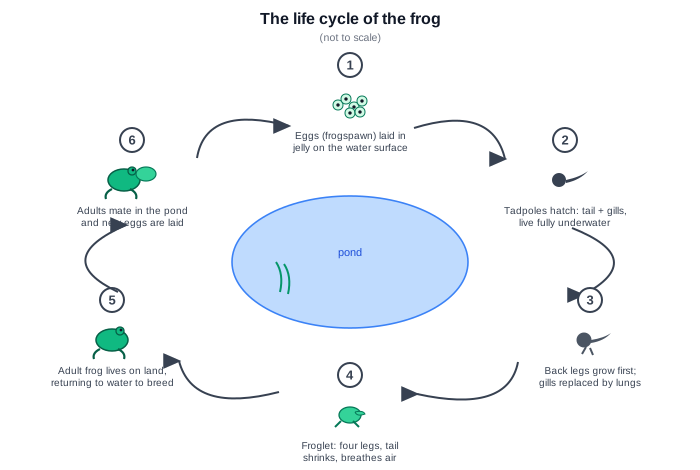
The diagram illustrates the six stages in the life cycle of the frog.
Overall, the cycle takes place in and around a pond, and its central feature is a complete transformation: a fish-like, gill-breathing creature that lives entirely underwater gradually becomes an air-breathing animal that lives on land, returning to the water only to breed.
The cycle begins when eggs, known as frogspawn, are laid in a mass of jelly which floats on the surface of the pond. The eggs hatch into tadpoles — small swimmers with tails and gills that live fully underwater. As each tadpole grows, its back legs appear first, and at the same time its gills are gradually replaced by lungs.
In the fourth stage the animal becomes a froglet: it now has all four legs, its tail is steadily shrinking, and it begins to breathe air. The adult frog that results lives mainly on land. Finally, mature adults return to the pond, where they mate, and a new mass of frogspawn is laid — at which point the cycle starts once more.
| gill-breathing | thở bằng mang |
| air-breathing | thở bằng khí trời |
| to breed | để sinh sản |
| floats on the surface | nổi trên mặt nước |
| back legs appear first | chân sau mọc trước |
| replaced by lungs | được thay bằng phổi |
| shrinking | teo dần |
| mate | ghép đôi sinh sản |