Process — How bricks are manufactured
📄 Bài mẫu band 8–9
| Introduction | Paraphrase: sơ đồ quy trình sản xuất gạch cho ngành xây dựng. |
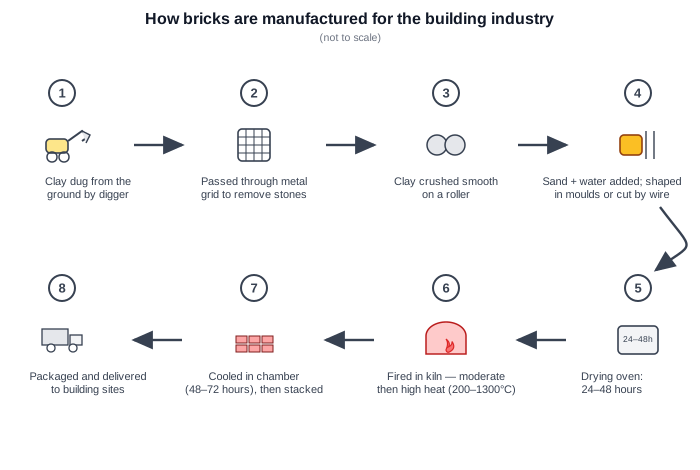
| Overview | Overall: 8 bước từ đào đất sét tới giao hàng; đất sét được sàng, cán, tạo hình rồi qua ba khâu nhiệt (sấy, nung, làm nguội) trước khi đóng gói. |
| Body 1 | Tạo hình: máy xúc đào đất sét → qua lưới thép loại sỏi đá → cán mịn trên lô → trộn cát và nước, tạo hình bằng khuôn hoặc cắt bằng dây thép. |
| Body 2 | Nhiệt & giao: sấy trong lò 24–48 giờ → nung lò nhiệt vừa rồi nhiệt cao (200–1300°C) → làm nguội trong buồng 48–72 giờ → xếp kiện, đóng gói, chở tới công trường. |
The diagram shows the eight-stage process by which bricks are produced for the building industry.
Overall, raw clay is refined and shaped in the first half of the process, and then passes through three carefully timed heat treatments — drying, firing and cooling — before the finished bricks are packaged and delivered.
Production begins with a digger excavating clay from the ground. The clay is placed on a metal grid, which sifts out stones and other coarse material, and it is then crushed smooth by a roller. At the fourth stage, sand and water are added, and the mixture is either shaped in moulds or cut into individual bricks with a wire.
The formed bricks then enter a drying oven, where they remain for between twenty-four and forty-eight hours. Next, they are fired in a kiln, first at a moderate temperature and then at a high one, within an overall range of roughly two hundred to thirteen hundred degrees Celsius. After firing, the bricks are moved to a cooling chamber for forty-eight to seventy-two hours. Finally, they are stacked, packaged and delivered by lorry to building sites, ready for use in construction.
| excavating | đào lấy |
| sifts out | sàng loại bỏ |
| moulds | khuôn |
| cut into individual bricks with a wire | được cắt bằng dây thép |
| drying oven | lò sấy |
| kiln | lò nung |
| moderate temperature | nhiệt độ vừa phải |
| cooling chamber | buồng làm nguội |