Process — The life cycle of a polymer banknote
📄 Bài mẫu band 8–9
| Introduction | Paraphrase: sơ đồ vòng đời một tờ tiền polymer từ sản xuất đến tái chế. |
| Overview | Overall: 8 giai đoạn, gần như một vòng kín — sản xuất → lưu thông 6–8 năm → kiểm tra chất lượng → tờ đạt quay lại lưu thông, tờ hỏng nghiền thành nhựa tái chế. |
| Body 1 | Sản xuất: hạt polymer cán thành phim trong → in bảo an + hologram → cắt tờ rời → phát hành qua ngân hàng và ATM. |
| Body 2 | Lưu thông và hồi kết: dân dùng đi dùng lại 6–8 năm → nộp về máy kiểm tra → tờ còn tốt trở lại lưu thông, tờ rách nghiền vụn làm sản phẩm nhựa. |
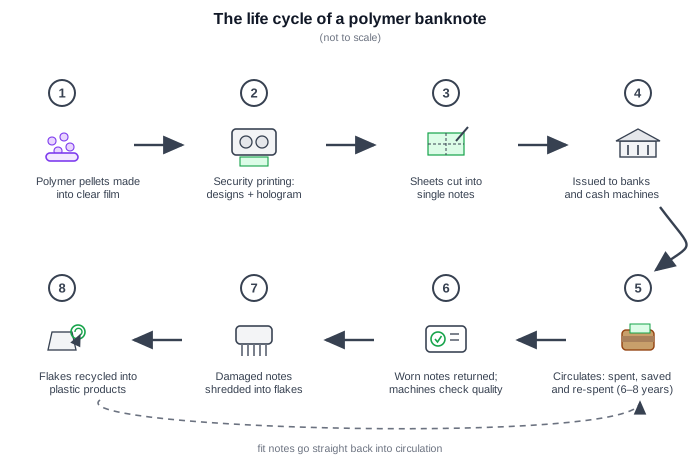
The diagram traces the life of a polymer banknote through eight stages, from its manufacture to its eventual recycling.
Overall, the process is almost a closed loop: after notes are printed and issued, they circulate for several years before being quality-checked, at which point worn notes are destroyed and recycled while fit ones return to use.
Production begins with polymer pellets, which are melted and formed into a thin transparent film. Security designs, including a hologram, are then printed onto large sheets, and these sheets are cut into individual notes. The finished notes are issued to commercial banks and loaded into cash machines, from where they enter everyday circulation.
A typical note is then spent, saved and re-spent repeatedly over a lifespan of six to eight years. When notes become worn, they are returned to the central bank, where machines automatically check their condition. Notes that pass this inspection go straight back into circulation, whereas damaged ones are shredded into small flakes. In the final stage, these flakes are recycled as raw material for other plastic products, meaning that very little of the original note is wasted.
| closed loop | vòng khép kín |
| polymer pellets | hạt nhựa polymer |
| Security designs | in bảo an |
| enter everyday circulation | đi vào lưu thông |
| lifespan | vòng đời |
| worn notes | tờ tiền cũ nát |
| shredded into small flakes | bị nghiền thành vụn |
| raw material | nguyên liệu thô |