Process — The recycling of aluminium drinks cans
📄 Bài mẫu band 8–9
| Introduction | Paraphrase: sơ đồ chu trình tái chế lon nhôm. |
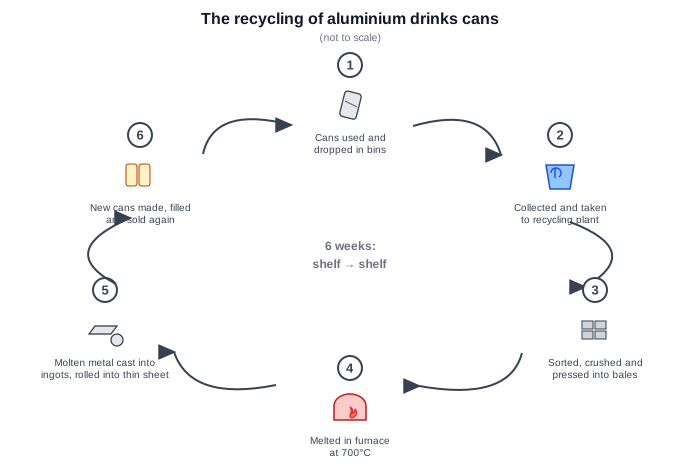
| Overview | Overall: vòng khép kín 6 bước — lon dùng xong được thu gom, ép kiện, nấu chảy, cán tấm rồi thành lon mới; toàn bộ chu trình từ kệ hàng quay về kệ hàng chỉ mất ~6 tuần. |
| Body 1 | Thu gom: lon uống xong bỏ thùng tái chế → chuyển về nhà máy → phân loại, ép dẹt thành kiện. |
| Body 2 | Tái sinh: kiện nấu chảy ở 700°C → kim loại lỏng đúc thỏi, cán thành tấm mỏng → sản xuất lon mới, chiết rót và bán — vòng lặp bắt đầu lại. |
The diagram shows the six stages in the recycling of aluminium drinks cans.
Overall, the process is a closed loop: used cans are collected, melted down and rolled into new metal, and remarkably a can may be back on the supermarket shelf as a new drink in as little as six weeks.
The cycle begins with consumers, who drop their empty cans into recycling bins. The bins are emptied and the cans are transported to a recycling plant, where they are sorted, crushed flat and pressed into large bales for easier handling.
The fourth stage is the key transformation: the bales are fed into a furnace and melted at around 700 degrees Celsius. The molten aluminium is then cast into ingots, which are passed through rollers and flattened into thin sheet metal. In the final stage this sheet is used to manufacture brand-new cans, which are filled, sold and — once emptied — re-enter the same cycle. Because the metal can be melted again and again without losing quality, the same aluminium may circulate through this loop indefinitely.
| closed loop | vòng khép kín |
| back on the supermarket shelf | quay lại kệ siêu thị |
| six weeks | sáu tuần |
| pressed into large bales | ép thành kiện lớn |
| melted at around 700 degrees Celsius | nấu chảy ở khoảng 700°C |
| cast into ingots | đúc thành thỏi |
| re-enter the same cycle | quay lại đúng chu trình đó |
| indefinitely | mãi mãi/không giới hạn |