Pie chart — Types of course chosen by college students, 1984, 1994 and 2004
📄 Bài mẫu band 8–9
| Introduction | Paraphrase: tỷ trọng các loại khoá học sinh viên chọn tại một trường cao đẳng, 1984, 1994 và 2004. |
| Overview | Overall: khoá chính quy ban ngày mất dần chỗ đứng vào tay các hình thức học linh hoạt, và vị trí dẫn đầu đã đổi chủ. Không số liệu. |
| Body 1 | Khoá ban ngày 46% → 32% → 18%, giảm ở cả hai giai đoạn và mất ngôi đầu cho khoá buổi tối vào năm 2004. |
| Body 2 | Khoá buổi tối 24% → 34%; khoá nghề ngắn 18% → 27%; học từ xa 12% → 21%, tăng gần gấp đôi. |
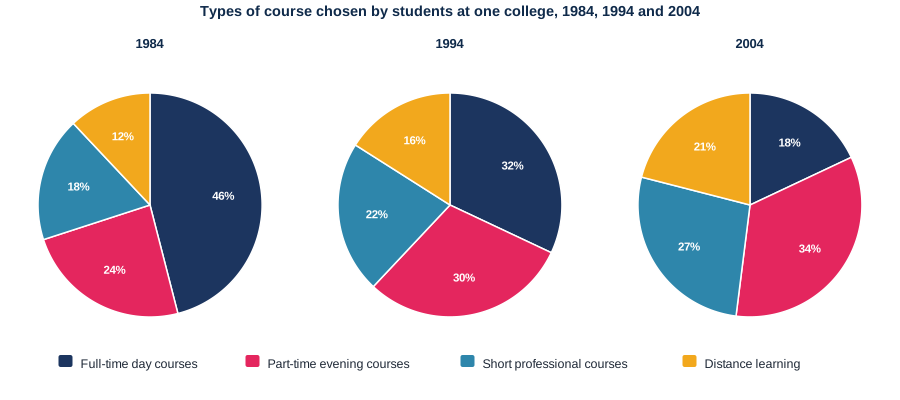
The three pie charts compare the proportions of students at one college who chose four different types of course in 1984, 1994 and 2004.
Overall, traditional full-time study steadily lost ground over the twenty years, while every one of the more flexible study options attracted a larger share of students at each measurement. As a result the leading category changed by the end of the period.
Full-time day courses were chosen by 46% of students in 1984, almost half of the intake and twice the share of the next largest category. This proportion then fell at each interval, to 32% in 1994 and 18% in 2004, meaning that the category shed more than half of its original share and finished as the least popular option of the four.
The three remaining course types all showed consistent growth. Part-time evening classes rose from 24% to 30% and then 34%, taking over the top spot in the final year. Short professional courses increased from 18% to 27%, while distance learning, the smallest category throughout, nearly doubled its share from 12% to 21%. By 2004 the three flexible formats together accounted for more than four fifths of enrolments.
| steadily lost ground | dần đánh mất chỗ đứng |
| flexible study options | các hình thức học linh hoạt |
| shed more than half | mất đi hơn một nửa |
| consistent growth | mức tăng đều đặn |
| taking over the top spot | chiếm lấy vị trí dẫn đầu |
| nearly doubled | gần gấp đôi |
| more than four fifths | hơn bốn phần năm |