Maps — A river valley before and after a dam
📄 Bài mẫu band 8–9
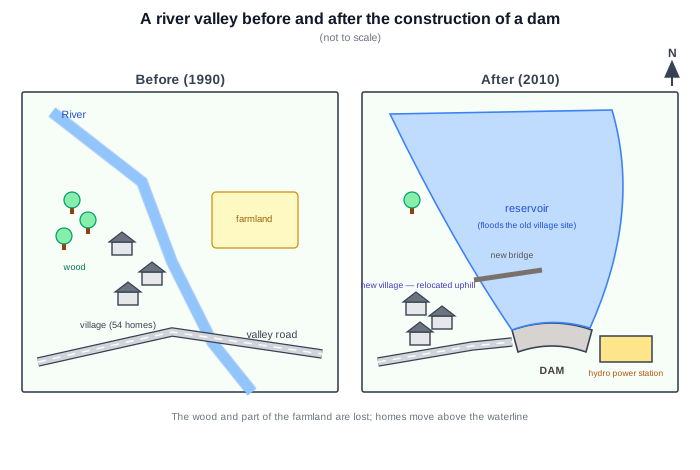
| Introduction | Paraphrase: hai bản đồ so sánh một thung lũng sông năm 1990 và năm 2010 sau khi xây đập. |
| Overview | Overall: thay đổi triệt để nhất có thể — hồ chứa nhấn chìm gần hết đáy thung lũng, xoá làng cũ và rừng; dân được dời lên cao, kèm đập, trạm thuỷ điện, cầu mới. |
| Body 1 | 1990: sông chảy dọc thung lũng; làng 54 nóc nhà ở bờ tây, cạnh rừng nhỏ; ruộng canh tác phía đông; một con đường men theo đáy thung lũng. |
| Body 2 | 2010: đập chắn ngang phía nam, hồ chứa ngập toàn bộ vị trí làng cũ và phần lớn ruộng; làng mới xây trên sườn cao phía tây nam; trạm thuỷ điện cạnh chân đập; cầu mới bắc ngang hồ; đường cũ chỉ còn đoạn dẫn tới đập. |
The two maps compare a river valley as it was in 1990 with the same valley in 2010, after a dam had been constructed across it.
Overall, this is a transformation of the most radical kind: the new reservoir has submerged almost the entire valley floor, erasing the original village and much of the farmland, while the community itself has been relocated to higher ground.
In 1990 a river ran the length of the valley from north to south. A village of about fifty-four homes stood on its western bank, next to a small wood, while an area of farmland occupied the eastern side. A single road wound along the valley floor, linking the village with the wider area.
By 2010 a dam had been built across the southern end of the valley, with a hydroelectric power station at its base. Behind it, a large reservoir now floods the site of the old village, the wood and most of the fields. The villagers have been rehoused in a new settlement built safely uphill to the south-west, and a new bridge crosses the water where the valley narrows. Of the old valley road, only the stretch leading to the dam remains in use.
| transformation of the most radical kind | sự biến đổi triệt để |
| submerged | nhấn chìm |
| erasing | xoá sổ |
| relocated | được di dời |
| valley floor | đáy thung lũng |
| wound along | uốn lượn men theo |
| rehoused | được tái định cư |
| remains in use | vẫn còn được sử dụng |