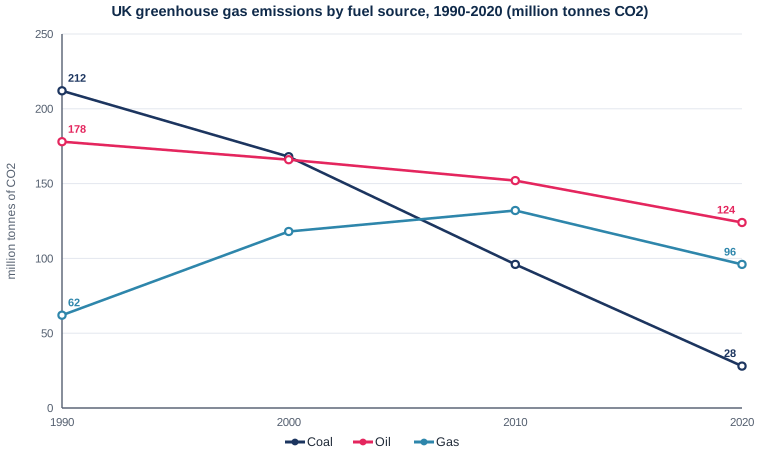
Line graph — UK greenhouse gas emissions from oil, coal and gas, 1990-2020
📄 Bài mẫu band 8–9
| Introduction | Paraphrase: phát thải khí nhà kính từ 3 nguồn nhiên liệu ở Anh, 1990-2020. |
| Overview | Overall: cả ba nguồn đều phát thải ít hơn năm 1990; than giảm mạnh nhất và mất vị trí dẫn đầu vào tay dầu. Không số liệu. |
| Body 1 | Than 212 → 28 triệu tấn (giảm gần 9 lần); dầu 178 → 124, giảm đều và trở thành nguồn lớn nhất từ khoảng 2010. |
| Body 2 | Khí đốt 62 → đỉnh 132 (2010) → 96; đảo chiều ở giai đoạn cuối, kết thúc vẫn cao hơn mốc đầu. |
The line graph shows the volume of greenhouse gases, in millions of tonnes of carbon dioxide, released by coal, oil and gas in the United Kingdom over a thirty-year period.
Overall, every fuel source produced fewer emissions in 2020 than it had at the start, but the fall was far from even. Coal emissions collapsed, losing their position as the country's largest source to oil, whereas gas was the only fuel to rise before declining.
Coal was comfortably the dirtiest source in 1990, accounting for 212 million tonnes, but its emissions fell relentlessly to 168 million in 2000, 96 million in 2010 and just 28 million by 2020 — a nine-fold reduction. Oil declined far more gently, from 178 to 124 million tonnes, and although this was a steady decline, it was slow enough for oil to become the single largest source of emissions from about 2010 onwards.
Gas followed a completely different pattern. Emissions more than doubled in the first two decades, from 62 to 132 million tonnes, overtaking coal in the process, before reversing direction and falling to 96 million by 2020. Even so, gas ended the period well above its 1990 level, the only fuel to do so.
| collapsed | sụp đổ, lao dốc |
| fell relentlessly | giảm không ngừng |
| a nine-fold reduction | mức giảm chín lần |
| a steady decline | một sự sụt giảm đều đặn |
| the single largest source | nguồn lớn nhất tính riêng lẻ |
| more than doubled | tăng hơn gấp đôi |
| reversing direction | đảo chiều |