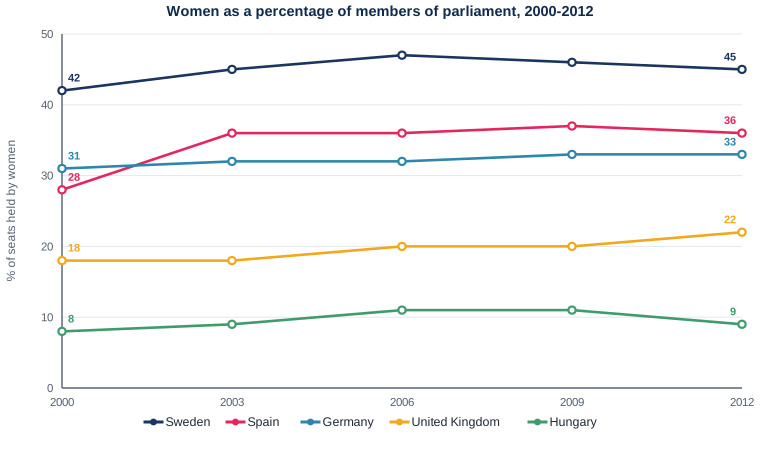
Line graph — Women as a percentage of members of parliament in five European countries, 2000-2012
📄 Bài mẫu band 8–9
| Introduction | Paraphrase: tỷ lệ nữ nghị sĩ ở 5 nước châu Âu, 2000-2012. |
| Overview | Overall: Thuỵ Điển luôn dẫn đầu, Hungary luôn thấp nhất; hầu hết các nước tăng nhẹ, Tây Ban Nha tăng mạnh nhất. Không số liệu. |
| Body 1 | Thuỵ Điển 42% → đỉnh 47% (2006) → 45%; Tây Ban Nha 28% → 36%, vượt Đức ngay 2003; Đức gần như đi ngang 31% → 33%. |
| Body 2 | Anh 18% → 22% (tăng chậm nhất về tỷ lệ); Hungary 8% → đỉnh 11% (2006-2009) → 9%, luôn cuối bảng. |
The line graph compares the proportion of seats in parliament held by women in five European countries over a twelve-year period from 2000 to 2012.
Overall, Sweden remained the front-runner throughout the period while Hungary consistently had the smallest share of female representatives. Most countries recorded modest gains, but Spain improved far more sharply than any other nation.
Sweden began with 42% of parliamentary seats occupied by women, peaked at 47% in 2006 and then slipped back slightly to 45% by 2012, remaining well ahead of its neighbours. Spain showed the most dramatic movement: its figure climbed sharply from 28% to 36% in the first three years alone, which was enough to overtake Germany, and it then levelled off for the remainder of the period. German representation, by contrast, barely moved, rising from 31% to just 33%.
The other two countries lagged well behind. In the United Kingdom the proportion of female MPs stood at 18% in both 2000 and 2003 before edging up to 22% by the end of the period. Hungary followed a less consistent path, rising from 8% to a high of 11% between 2006 and 2009 but finishing at only 9%, the sole country to end lower than its own mid-period peak.
| remained the front-runner | giữ vị trí dẫn đầu |
| peaked at | đạt đỉnh ở mức |
| slipped back | tụt lại |
| climbed sharply | tăng vọt |
| overtake | vượt qua |
| levelled off | chững lại, đi ngang |
| lagged well behind | tụt lại phía sau khá xa |
| edging up | nhích lên |