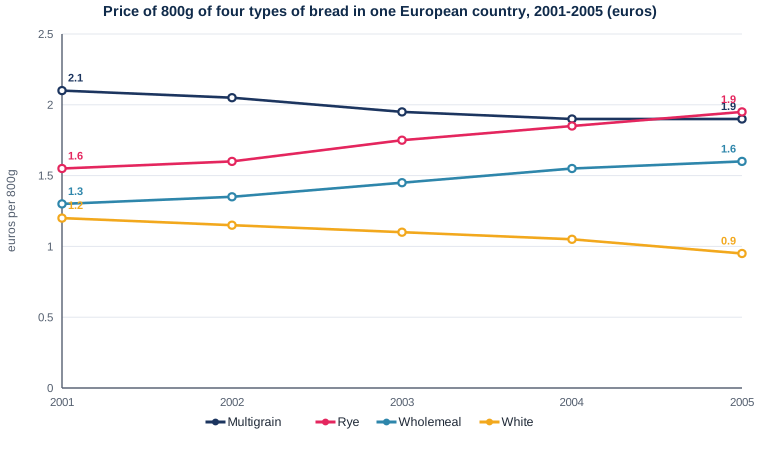
Line graph — Price of 800g of four types of bread in one European country, 2001-2005
📄 Bài mẫu band 8–9
| Introduction | Paraphrase: giá 800g của 4 loại bánh mì ở một nước châu Âu, 2001-2005, đơn vị euro. |
| Overview | Overall: hai loại bánh mì tăng giá còn hai loại giảm, khiến bốn mức giá xích lại gần nhau; bánh mì trắng luôn rẻ nhất. Không số liệu. |
| Body 1 | Rye 1,55 → 1,95 euro (tăng mạnh nhất, vượt multigrain năm 2005); wholemeal 1,30 → 1,60 euro. |
| Body 2 | Multigrain 2,10 → 1,90 euro (đắt nhất nhưng giảm); white 1,20 → 0,95 euro, loại duy nhất xuống dưới 1 euro. |
The line graph compares the price of 800 grams of four types of bread, measured in euros, in a European country over a five-year period.
Overall, the four varieties moved closer together in price, as the two cheaper breads rose while the two more expensive ones fell. White bread was the least costly option in every year and became cheaper still.
Rye bread showed the steepest increase, rising steadily from 1.55 euros in 2001 to 1.95 euros in 2005, an increase of roughly a quarter. This was sufficient for it to move ahead of multigrain bread in the final year, having started 55 cents below it. Wholemeal bread followed a similar upward path, climbing from 1.30 to 1.60 euros, though it remained the second cheapest variety throughout.
The other two breads became cheaper. Multigrain, the priciest option at the start, edged down from 2.10 to 1.90 euros, while white bread fell from 1.20 to 0.95 euros, making it the only variety to sell for under a euro by 2005. As a result, the price gap between the dearest and cheapest loaves narrowed from 90 cents to 60 cents.
| moved closer together | xích lại gần nhau |
| rising steadily | tăng đều đặn |
| move ahead of | vươn lên trên |
| the priciest option | loại đắt nhất |
| edged down | nhích xuống |
| the price gap between | khoảng cách giá giữa |
| narrowed | thu hẹp lại |