Line — Journeys to work by transport mode, 1990–2030 (projected)
📄 Bài mẫu band 8–9
| Introduction | Paraphrase: biểu đồ 4 phương thức đi làm ở Melway 1990–2020 kèm dự báo 2030 (nét đứt). |
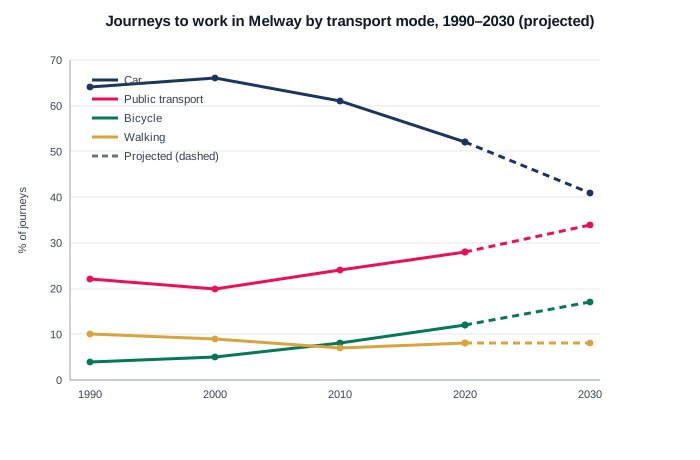
| Overview | Overall: xe hơi thống trị nhưng thoái trào từ 2000 và được dự báo giảm tiếp còn 41%; xe đạp là chuyển biến mạnh nhất (4% → dự kiến 17%, hơn gấp 4); đi bộ gần như phẳng. |
| Body 1 | 1990–2020 (số liệu thật): xe hơi 64% → đỉnh 66% (2000) → 52%; công cộng lõm 20% (2000) rồi lên 28%; xe đạp 4→12%; đi bộ quanh 7–10%. |
| Body 2 | Dự báo 2030: xe hơi 41%, công cộng 34% — khoảng cách thu về 7 điểm; xe đạp 17% vượt đi bộ xa; nếu đúng dự báo, xe hơi lần đầu mất thế đa số tuyệt đối. |
The graph shows how workers in Melway travelled to their jobs between 1990 and 2020, with dashed lines projecting the trends to 2030.
Overall, the story is a slow retreat of the car: still the dominant mode throughout, it has been losing ground since 2000 to public transport and, most dramatically in relative terms, to cycling, whose share is expected to have quadrupled by 2030. Walking alone remains essentially flat.
In the measured period, car journeys edged up from 64 to 66 per cent by 2000 and then fell steadily to 52 per cent in 2020. Public transport followed the opposite path — dipping to 20 per cent in 2000 before recovering to 28 — while cycling tripled from 4 to 12 per cent. Walking drifted between 7 and 10 per cent without any clear direction.
The projections extend every one of these trajectories. By 2030 the car is forecast to carry just 41 per cent of commuters, with public transport at 34 — narrowing the gap between them to only seven points — and cycling at 17 per cent, well clear of walking. If the forecasts hold, 2030 will be the first year in the chart in which most journeys to work in Melway are not made by car.
| projecting the trends to 2030 | dự phóng xu hướng tới 2030 |
| the dominant mode | phương thức áp đảo |
| is expected to have quadrupled | dự kiến tăng gấp bốn |
| essentially flat | gần như đi ngang |
| 52 per cent | 52% |
| 12 per cent | 12% |
| is forecast to carry | được dự báo sẽ chuyên chở |
| well clear of walking | bỏ xa đi bộ |
| not made by car | không còn bằng xe hơi |