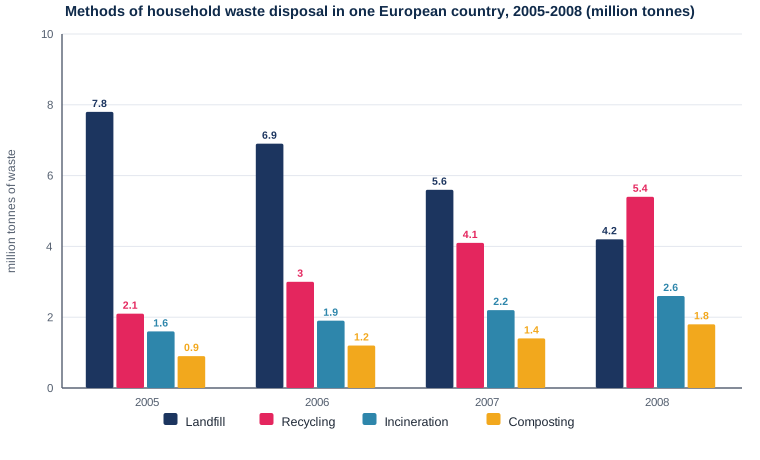
Bar chart — Methods of waste disposal in a European country, 2005-2008
📄 Bài mẫu band 8–9
| Introduction | Paraphrase: các phương pháp xử lý rác sinh hoạt ở một nước châu Âu, 2005-2008, triệu tấn. |
| Overview | Overall: chôn lấp giảm mạnh và mất vị trí phương pháp chủ đạo vào tay tái chế, trong khi mọi phương pháp còn lại đều tăng. Không số liệu. |
| Body 1 | Chôn lấp 7,8 → 4,2 triệu tấn, giảm cả 3 năm; bị tái chế vượt trong khoảng 2007-2008. |
| Body 2 | Tái chế 2,1 → 5,4 (tăng nhanh nhất); thiêu đốt 1,6 → 2,6; ủ phân 0,9 → 1,8 nhưng vẫn thấp nhất. |
The bar chart shows how much household waste, in millions of tonnes, was dealt with by four different disposal methods in a European country between 2005 and 2008.
Overall, the country shifted away from landfill towards recycling over these four years. Landfill was the only method to decline, while the three alternatives all handled steadily larger volumes of waste.
Landfill dominated at the start of the period, absorbing 7.8 million tonnes of waste in 2005, but the figure fell in each successive year, to 6.9, 5.6 and finally 4.2 million tonnes. This amounts to a reduction of almost half, and it was enough for landfill to be overtaken by recycling between 2007 and 2008.
Recycling grew fastest of all, more than doubling from 2.1 to 5.4 million tonnes and taking over as the leading method by the end of the period. Incineration and composting followed the same upward direction on a much smaller scale, rising from 1.6 to 2.6 and from 0.9 to 1.8 million tonnes respectively. Composting remained the least common method throughout, handling only a third as much waste as landfill even in the final year.
| shifted away from | dịch chuyển khỏi |
| a reduction of almost half | mức giảm gần một nửa |
| to be overtaken by | bị vượt qua bởi |
| more than doubling | tăng hơn gấp đôi |
| taking over as | tiếp quản vị trí |
| the least common method | phương pháp ít dùng nhất |