Bar chart — Modern foreign languages studied by 14-16 year-olds, 2000 and 2010
📄 Bài mẫu band 8–9
| Introduction | Paraphrase: tỷ lệ học sinh 14-16 tuổi học ngoại ngữ hiện đại ở một nước nói tiếng Anh, 2000 và 2010. |
| Overview | Overall: tiếng Pháp mất vị thế còn tiếng Tây Ban Nha đi lên, nhưng nhóm không học ngoại ngữ nào lại phình to nhất và vươn lên dẫn đầu. Không số liệu. |
| Body 1 | Tiếng Pháp 38% → 24% (giảm 14 điểm, mạnh nhất); tiếng Đức 16% → 9%, gần như mất một nửa. |
| Body 2 | Tiếng Tây Ban Nha 12% → 22%; ngôn ngữ khác 4% → 7%; không học ngoại ngữ 30% → 38%, thành nhóm lớn nhất năm 2010. |
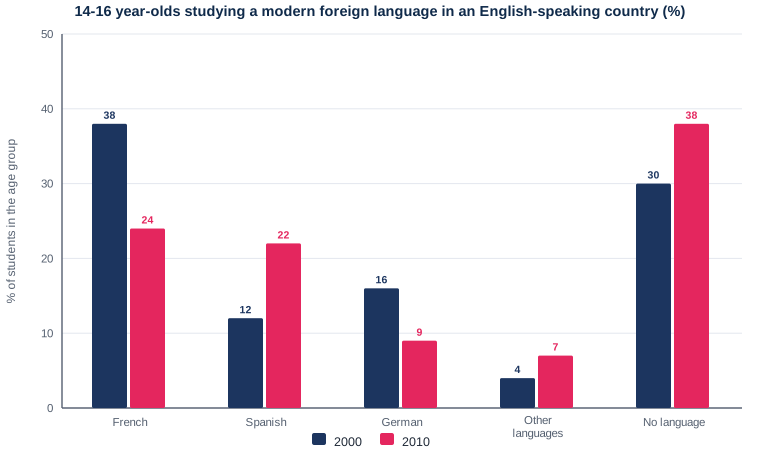
The bar chart compares the proportion of students aged 14 to 16 in an English-speaking country who studied various modern foreign languages in 2000 and 2010.
Overall, French lost its position as the dominant language while Spanish gained ground. The most striking development, however, was that the share of teenagers studying no foreign language at all rose and became the largest single group by 2010.
French was studied by 38% of students in 2000, more than any other language, but it fell out of favour over the decade and was taken by only 24% of the age group in 2010, a drop of fourteen percentage points. German declined in the same direction and even more steeply in relative terms, almost halving from 16% to 9%, which left it as the least popular named language.
Spanish moved the other way, climbing from 12% to 22% and overtaking German to become the second most studied language. Minority languages also rose modestly, from 4% to 7%. Meanwhile the proportion of students taking no language at all grew from 30% to 38%, meaning that by 2010 more teenagers studied no foreign language than studied French — a reversal of the position ten years earlier.
| gained ground | giành thêm chỗ đứng |
| the largest single group | nhóm đơn lẻ lớn nhất |
| fell out of favour | mất đi sự ưa chuộng |
| almost halving | gần như giảm một nửa |
| climbing from | leo lên từ mức |
| a reversal of | sự đảo ngược của |