Bar chart — Men and women with higher education qualifications in five countries, 2001
📄 Bài mẫu band 8–9
| Introduction | Paraphrase: tỷ lệ nam và nữ có bằng đại học ở 5 quốc gia năm 2001. |
| Overview | Overall: Canada dẫn đầu ở cả hai giới còn Thổ Nhĩ Kỳ đứng cuối; chiều của khoảng cách giới không giống nhau giữa các nước. Không số liệu. |
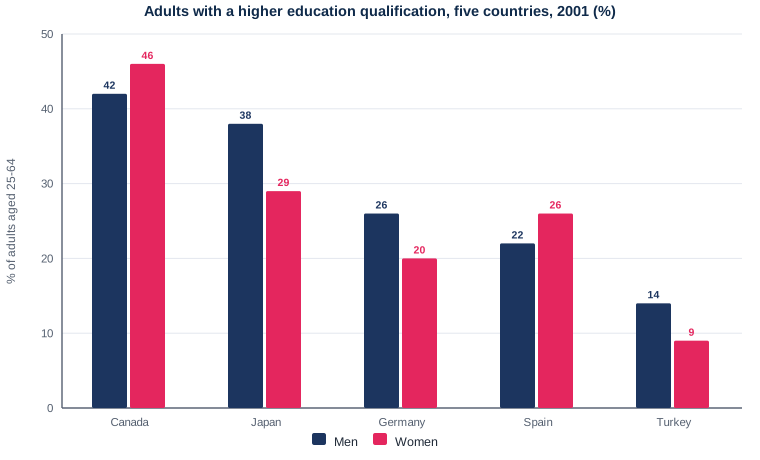
| Body 1 | Canada nữ 46% > nam 42%; Tây Ban Nha nữ 26% > nam 22% — hai nước duy nhất nữ trội. |
| Body 2 | Nhật nam 38% vs nữ 29% (chênh 9 điểm, lớn nhất); Đức 26% vs 20%; Thổ Nhĩ Kỳ 14% vs 9%, thấp nhất bảng. |
The bar chart compares the proportion of men and women holding a higher education qualification in five countries in 2001.
Overall, Canada was well ahead of the other four countries for both sexes, while Turkey ranked bottom on both measures. The direction of the gender gap was not consistent: in two countries women were better qualified than men, whereas in the other three the pattern was reversed.
Canada recorded the highest figures in the chart, with 46% of women and 42% of men qualified, one of only two countries where the balance was in favour of women. Spain showed the same pattern at a much lower level: 26% of Spanish women held a qualification compared with 22% of men, a difference of four percentage points.
In the remaining three countries men were ahead. The gap was widest in Japan, where 38% of men but only 29% of women had studied to this level, a margin of nine percentage points. Germany showed a similar imbalance on a smaller scale, at 26% against 20%. Turkey trailed the whole group, with just 14% of men and 9% of women qualified — barely a fifth of the Canadian figure for women.
| ranked bottom | đứng cuối bảng |
| the gender gap | khoảng cách giới |
| was reversed | bị đảo ngược |
| was in favour of | nghiêng về phía |
| a margin of | khoảng cách chênh lệch là |
| trailed | bám sau, thua kém |