Band 8.5 — Process: How Glass Bottles Are Recycled
📄 Bài mẫu band 8.5
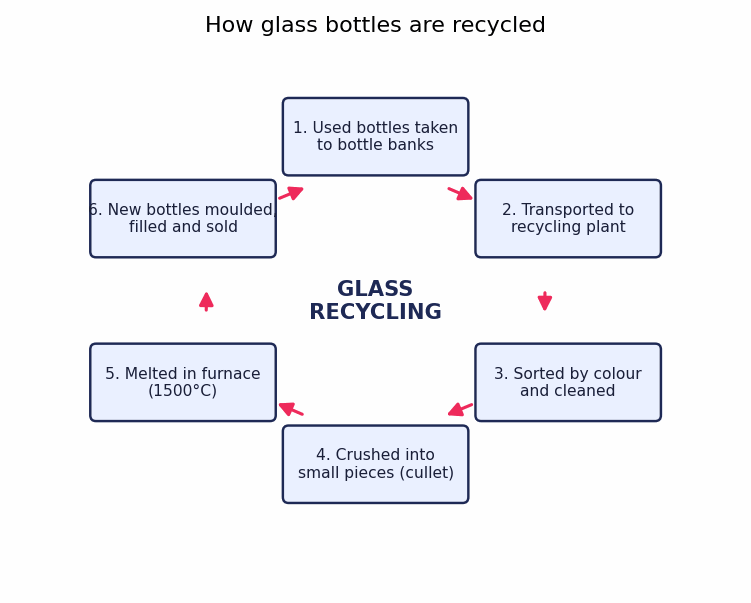
The diagram illustrates the process by which used glass bottles are recycled and turned into brand-new ones.
Overall, recycling glass is a cyclical process consisting of six stages. Its two key characteristics are that it forms a continuous loop, since the bottles produced at the end re-enter the system after use, and that intense heat is required at only a single point in the cycle.
The process is set in motion when members of the public deposit their empty bottles into bottle banks. From there, the glass is transported to a recycling plant, where it is sorted by colour and thoroughly cleaned to strip away caps, labels and other contaminants.
Once cleaned, the bottles are crushed into small fragments known as cullet. This material is subsequently melted in a furnace at around 1,500°C, producing molten glass from which fresh bottles are moulded. In the final stage, these bottles are filled, sold and used once more, at which point the entire cycle begins anew, making the process both continuous and highly sustainable.