Band 8.5 — Line Graph: Weekly Consumption of Four Protein Foods (1980–2020)
📄 Bài mẫu band 8.5
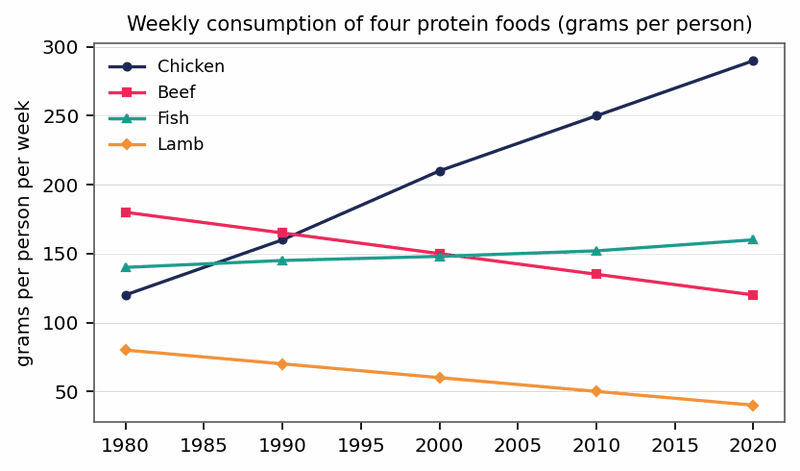
The line graph illustrates the average weekly amount of chicken, beef, fish and lamb, measured in grams per person, consumed in one country over the four decades to 2020.
Overall, chicken and beef effectively swapped places, with chicken becoming the dominant protein while the red meats declined; fish, by contrast, remained broadly unchanged throughout.
The most pronounced shift involved chicken and beef. In 1980, beef was the favoured meat at 180 grams per week, comfortably ahead of chicken, which stood at 120 grams. Thereafter, chicken climbed relentlessly, overtaking beef in the early 1990s and eventually peaking at 290 grams by 2020—almost two and a half times its starting figure. Beef, meanwhile, fell by a third over the same span, slipping to 120 grams.
The two remaining foods followed far quieter trajectories. Lamb halved across the period, sliding from 80 to a mere 40 grams and finishing as the least consumed item on the graph. Fish, in contrast, fluctuated remarkably little, edging up from 140 to 160 grams and thereby providing the sole element of stability in an otherwise shifting diet.